Why We Named It 1979 ?
1979 is a tribute to the moment personal objects started moving differently, and to a tactical wallet built like a small coordinated system instead of a pile of features.
In 1979, a small object changed what people expected from the things they carried.

The Sony Walkman did more than make music portable. It changed where music could live. A song no longer had to stay in a room, a car, or a pair of speakers. It could move with one person through a street, a train platform, a morning commute, or a quiet walk home.
To us, 1979 is not a retro label. It is a tribute to a turning point in personal carry.
The Walkman made a private experience mobile. It was technical, but it did not ask people to admire the technology first. The idea was simpler: what once stayed somewhere could now move with you.
The things we keep close now have to do more than they used to. They help us pay, identify ourselves, move through airports, unlock hotel doors, organize cards, carry cash, and keep small essentials within reach. But the best personal objects still need to work in motion, stay close to the body, and avoid becoming a burden just because they became more capable.
The Walkman Solved a "Both" Problem
The Walkman solved a "both" problem before personal technology had a name for it.
It had to be portable, but still worth listening to. Technical, but simple enough to use while walking. Personal, but not completely closed off from the person beside you. The early Walkman did not win by becoming every audio machine at once. It won by organizing the right functions around one new behavior: listening while moving.
A great carry object is rarely about adding everything. More often, it is about deciding what belongs, where it belongs, and what has to stay out of the way.
The old wallet problem was easy to understand: too much bulk, too much paper, too many receipts, too many cards that should have been removed years ago. Minimalist wallets answered that by making people carry less.
Modern wallets face a harder question. People still want the pocket to feel clean, but they also want faster card access, RFID-blocking structure, a place for cash, extra card capacity, leather that feels good in hand, and optional attachment points for the way they actually move.
The LORZOR 1979 Tactical Wallet faces a different object and a different pocket from the Walkman. But the design question feels familiar: how do you carry more capability without making the object harder to live with?
Modern Wallets Have Their Own "Both" Problem
A wallet is judged after it is loaded.
Many wallets look their best when nothing is inside them. The real test starts later: a debit card, a credit card, an ID, a hotel key card, a transit card, a few backup cards, folded bills, maybe a receipt that should have been thrown away before dinner.
Then the wallet goes into a front pocket.
Then you sit down.
Then you need one card quickly while someone is waiting behind you.
That is where the "both" problem becomes real. A wallet has to hold enough without feeling swollen, protect cards without becoming a block of metal, give fast access without turning every payment into a performance, and offer attachment options without feeling like equipment hanging off the hand.
This is the space the 1979 was built for. It is not trying to be the smallest possible minimalist wallet. A pure metal card holder may feel smaller for someone who carries only a few cards and no cash.
The 1979 is for a different kind of user: someone who still wants a controlled front-pocket wallet, but needs more from the object.
The 1979 Was Built Around a Harder Problem
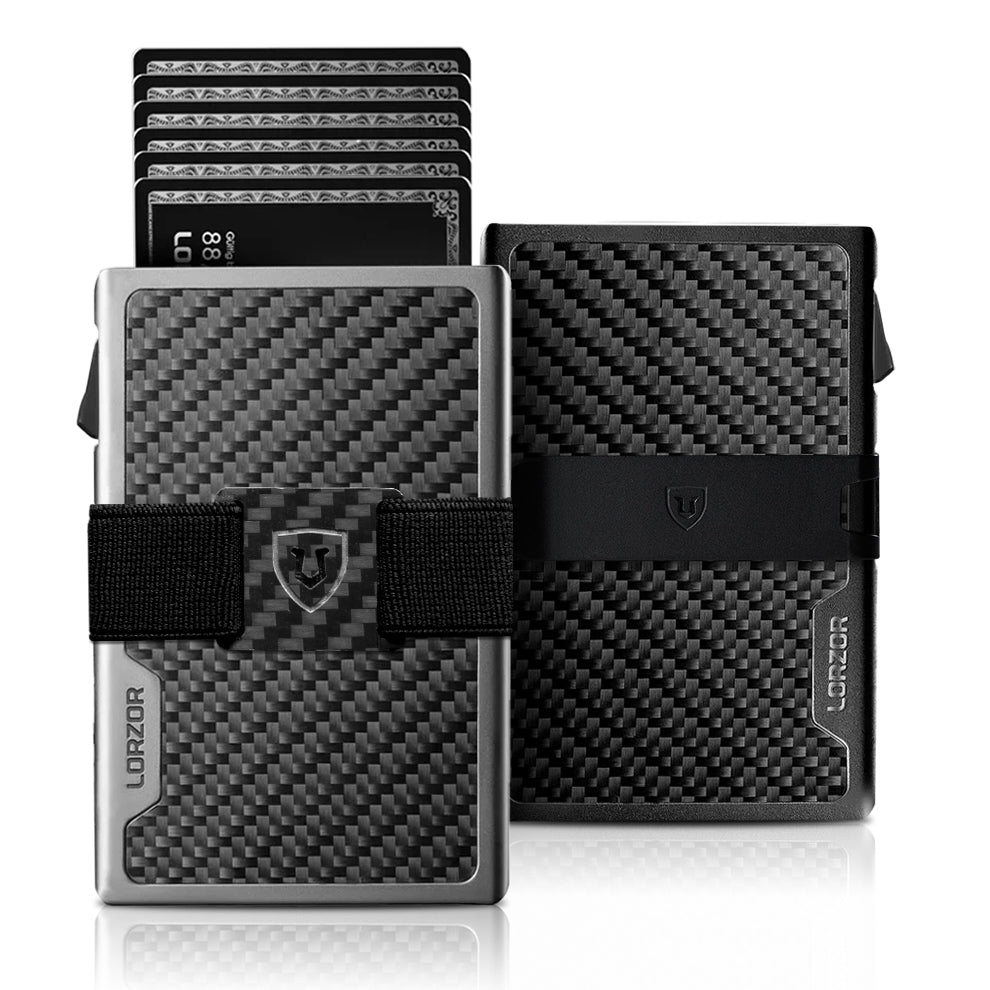
The LORZOR 1979 Tactical Wallet measures 2.87 x 3.89 x 0.6 inches and weighs about 80g. Inside that small frame, the aluminum pop-up chamber holds 5-7 cards, while the outer card slot adds room for up to 3-5 more. For the best daily balance, we recommend around 10 cards. The upper limit can reach about 12 depending on card thickness, but 12 is not the point. The point is giving the wallet enough range without letting the range ruin the carry.
One customer who had used a pure metal minimalist wallet for years noticed the tradeoff clearly. The 1979 gave him pop-up access, room for 10 cards, and space for folded bills in the clip. It also felt larger than the smaller metal wallet he had grown used to.
That tradeoff explains the design.
The 1979 was not built to win a contest for the smallest object on a desk. It was built to stay disciplined after cards, cash, RFID protection, pop-up access, leather feel, and optional attachment paths all enter the same pocket.
The pocket still has to win.

The More Had to Be Engineered Down
Every added feature has to pay rent.
A pop-up chamber needs structure. RFID blocking needs material. A money clip needs stiffness. Extra card storage needs space. Hook holes need reinforced placement. Full-grain leather brings warmth and grip, but it also has real substance.
If those parts are simply stacked together, the wallet becomes thick, heavy, and over-designed. The 1979 exists because the "more" had to be engineered down.
The aluminum chamber gives the wallet its core structure. It holds the card stack, supports the one-touch eject mechanism, and helps keep card access controlled. It also contributes to RFID-blocking performance at 13.56 MHz and above.
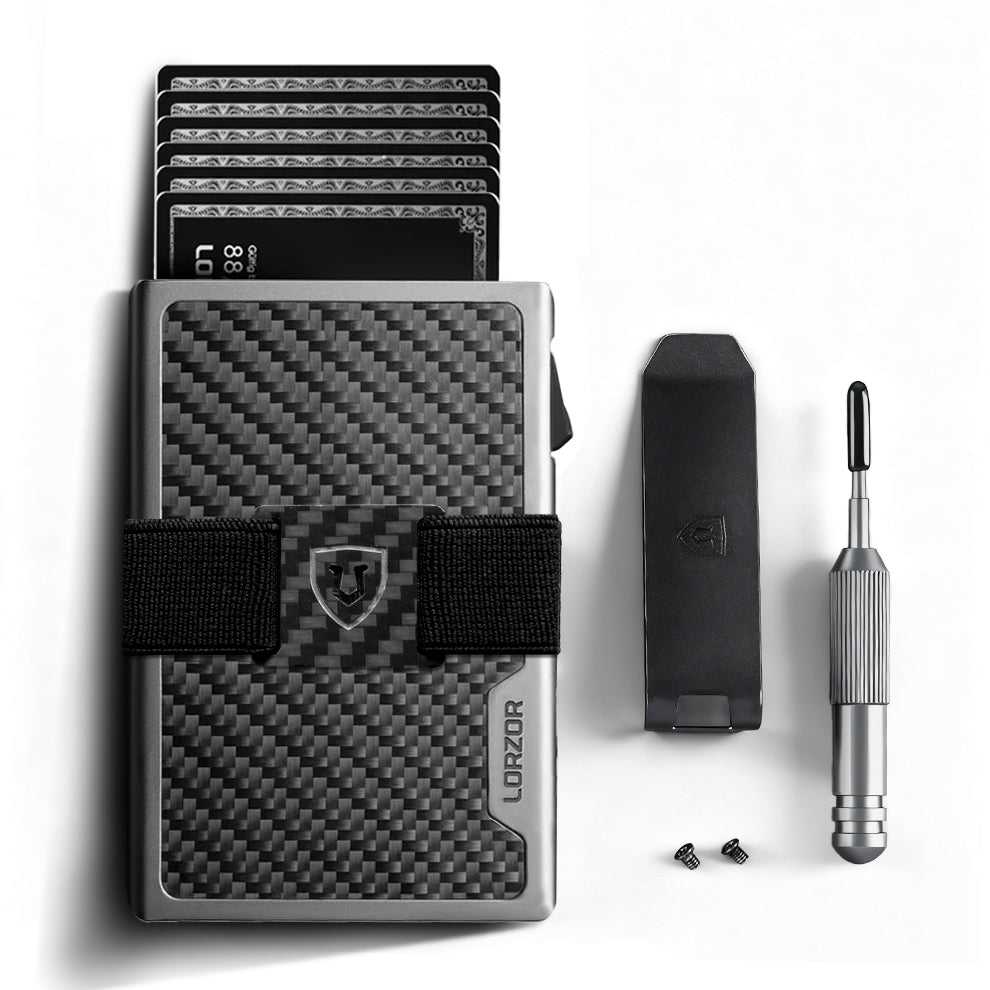
The money clip follows the same discipline. Its large cutout pattern is not there to look technical. It removes material to reduce weight while keeping enough rigidity to hold folded bills. Most people will not study that detail in a product photo. They will feel it when the wallet stays lighter in a pocket.
The hook holes work the same way. They leave room for optional setups, such as a keychain, strap, or AirTag holder, without forcing that setup on every user. Some people want the extra attachment path. Some want nothing added at all. A good detail should make both choices feel natural.
This is where the 80g weight and 0.6-inch thickness matter. They are evidence of restraint.
Leather Keeps the Object Human
If the 1979 were only aluminum, it would miss the point.
Bare metal can be efficient, but it can also feel cold. Traditional leather can feel warm, but by itself it does not solve modern card access, RFID blocking, or structured front-pocket carry.
The 1979 sits between those worlds.
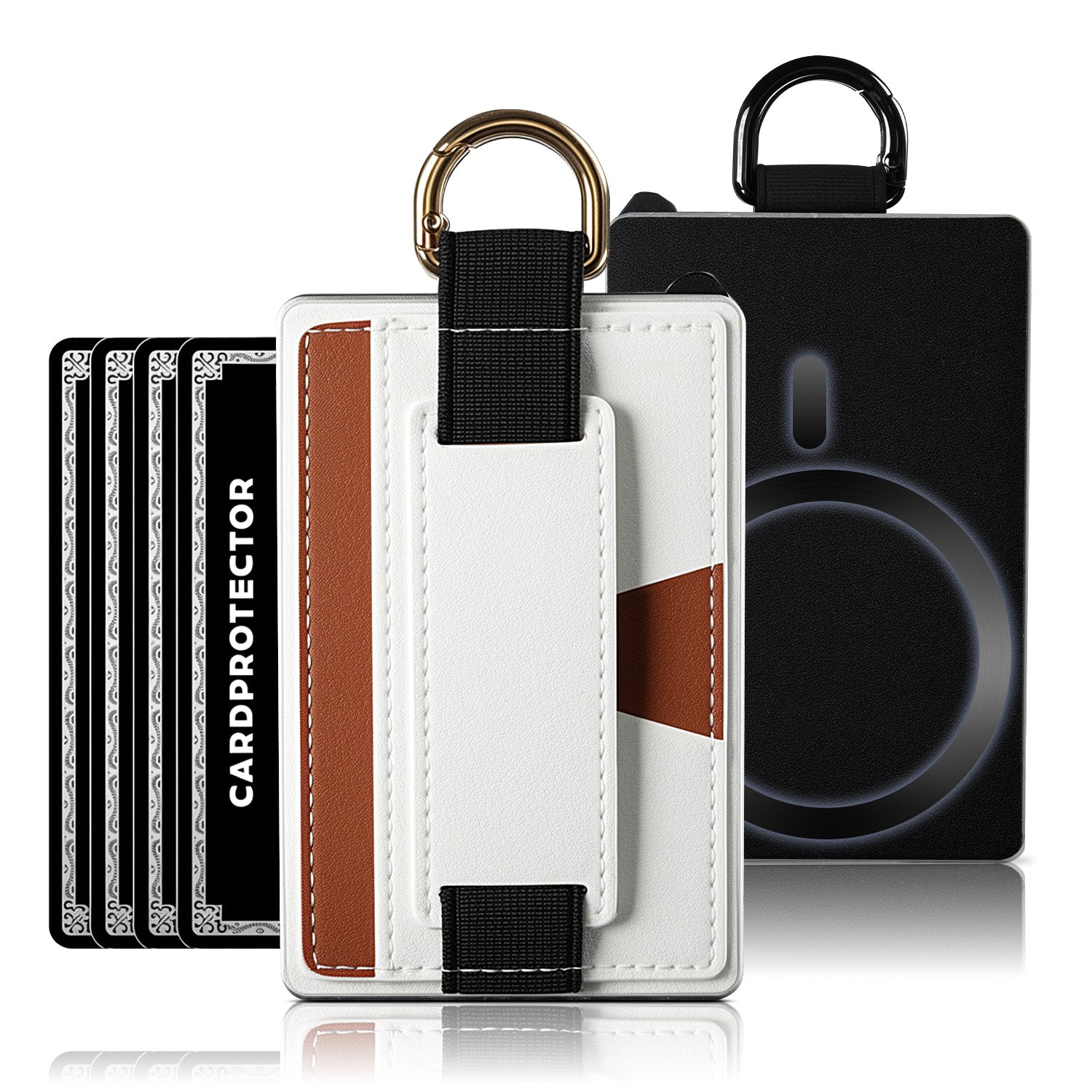
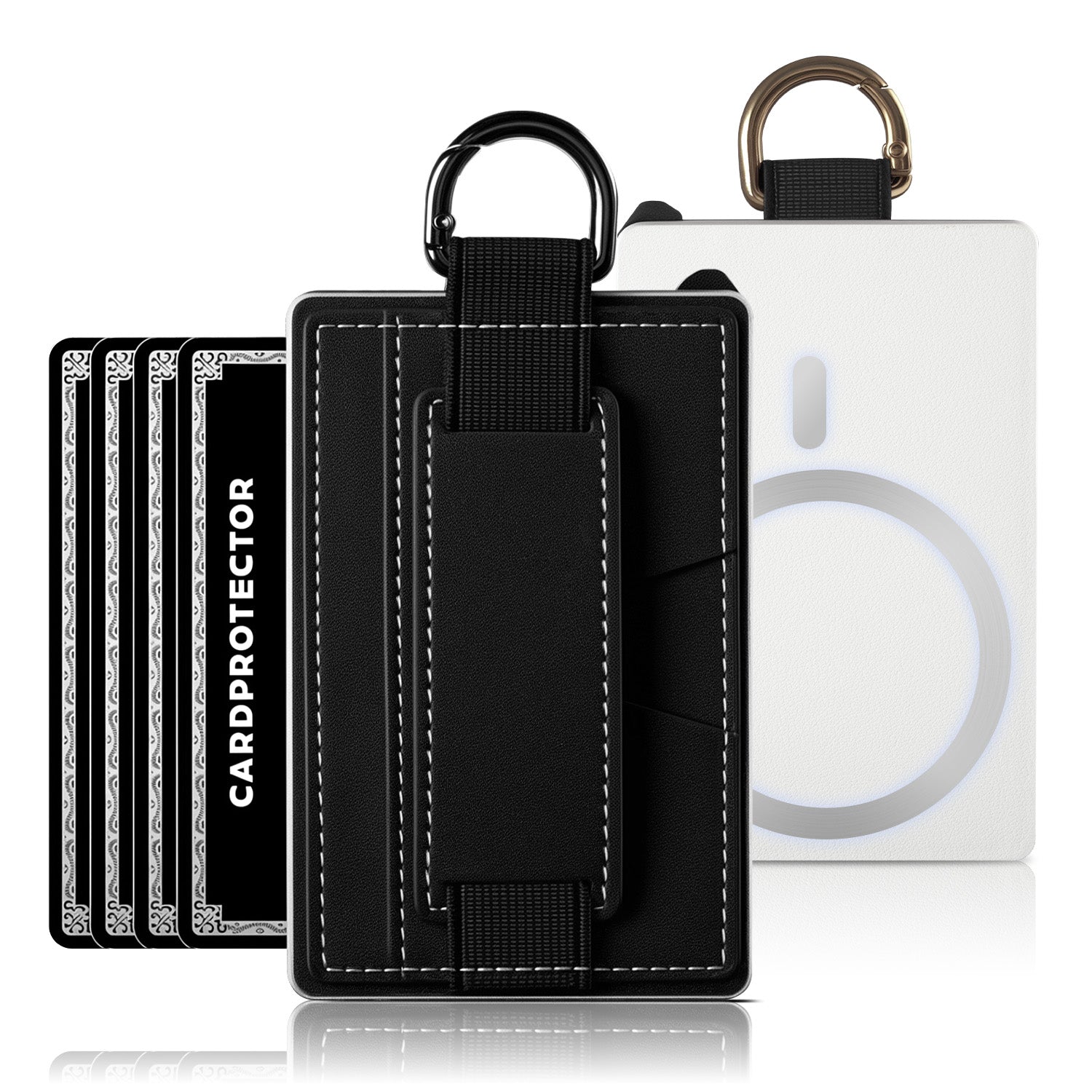
Aluminum gives it control. Full-grain leather gives it contact. Hand-stitching slows the object down just enough. The pop-up mechanism moves quickly, but the outside still feels like a wallet, not a gadget shell.
That matters because a wallet is handled before the day fully starts. It sits in the same pocket, gets picked up from the same table, comes out at the same coffee counter, and carries the marks of use in a way a screen never does. Over time, the leather can darken, soften, and develop a patina. The structure stays precise, but the surface becomes more personal.
That is the LORZOR balance: leather first, technology in its place.
Why We Call It Tactical
Tactical can be a loud word.
It can suggest military styling, oversized hardware, or a wallet trying to look tougher than the life it will actually live. That is not what LORZOR means by tactical.
For LORZOR, tactical means coordinated function.
A good tactical wallet works less like a single feature and more like a small unit. Every part has a role. Nothing is there only for show.
The aluminum chamber is the core action unit. It holds the card stack, supports the pop-up action, and keeps access controlled.
The outer card slot is the quick support position. It gives backup space for an ID, a hotel card, or the card you want separate from the main stack.
The money clip is the logistics unit. It keeps folded bills from turning into pocket clutter.
The hook holes are the modular interface. They allow optional attachment choices when the user wants a keychain, strap, or AirTag holder setup.
The RFID-blocking aluminum is the protection layer. It gives the card area practical shielding without asking the wallet to become fear-driven gear.
The full-grain leather is the human contact surface. It gives the hand warmth, grip, and a material that can age with the person using it.
The 80g weight and 0.6-inch thickness are the discipline. They keep the system from losing control.
That is the tactical idea behind 1979: not one oversized feature, but a group of small decisions working together.
A tactical squad is effective because each member has a job and the team moves as one. The 1979 follows the same logic in a wallet. Card access, cash carry, RFID protection, leather feel, attachment options, weight, and thickness all have to cooperate inside the same few inches.
If one part tries to dominate, the whole object suffers. Too much capacity becomes bulk. Too much metal becomes cold. Too many attachment options become clutter. Too much minimalism removes the usefulness people still need.
So the 1979 is tactical in the practical sense.
Not military.
Not overbuilt.
Not costume gear.
A controlled system of useful parts, built to move together.

Why We Named It 1979
1979 is a tribute to the moment personal objects started moving differently.
The Walkman did not matter because it looked backward. It mattered because it changed how an object could belong to one person in motion. It made a private experience portable, simple, and close to the body.
The LORZOR 1979 carries that idea into a different daily object.
It is a wallet for a time when people want more from what they carry, but do not want the carry itself to feel heavier, louder, or more complicated. It brings together leather, aluminum, pop-up access, cash carry, RFID protection, optional attachment paths, and front-pocket discipline in one compact system.
For us, the year works as a cultural reference point: a way to remember when personal objects began to feel more portable, more capable, and more closely tied to how one person moved through the day.
That is why we named it 1979.
Because the best carry objects do not simply hold things.
They change how the day moves with you.
Right in Hand. Ready for the Road.
FAQ
Why did LORZOR name this wallet 1979?
1979 is a tribute to a turning point in personal carry. The year is closely associated with the rise of portable personal audio, especially the first Walkman, which helped show that a personal object could move with one person through everyday life. For LORZOR, the name points to that broader idea: more capability, closer to the body, without making the object harder to live with.
What does the Walkman have to do with a wallet?
The Walkman is a cultural reference point, not a product partnership or design connection. Its importance is the shift it represented: personal technology became portable, simple, and part of daily movement. LORZOR 1979 applies that thinking to a wallet by organizing cards, cash, quick access, RFID protection, leather feel, and optional attachments into one controlled carry object.
What does tactical mean for LORZOR?
For LORZOR, tactical means coordinated function. It does not mean military styling or oversized hardware. In the 1979, the aluminum chamber, outer card slot, money clip, hook holes, RFID-blocking structure, leather surface, weight, and thickness each have a clear role. The value comes from how those roles work together.
What problem does the LORZOR 1979 Tactical Wallet solve?
It solves the modern wallet "both" problem: more usefulness without uncontrolled bulk. The 1979 is designed for people who want pop-up card access, room for about 10 daily cards, folded cash storage, RFID-blocking structure, full-grain leather, and optional attachment paths while keeping the wallet front-pocket friendly.
Is LORZOR 1979 designed to be the smallest possible wallet?
No. A pure metal minimalist card holder may feel smaller if you carry only a few cards and no cash. LORZOR 1979 is designed for a different balance: more practical capacity, leather hand feel, pop-up access, a money clip, RFID protection, and optional attachment points in a disciplined form.
How many cards should I carry in LORZOR 1979?
For the best daily balance, LORZOR recommends around 10 cards. The aluminum pop-up chamber holds 5-7 cards, and the outer slot can add up to 3-5 more. The upper limit can reach about 12 depending on card thickness, but the wallet feels best when it is loaded with essentials rather than pushed to the absolute maximum.
Explore Modern Carry
Discover leather-led carry goods built for work, travel, and everyday movement.