What Makes a Tactical Wallet Actually Useful?
A tactical wallet is not useful because it looks aggressive. It is useful when every part has a job, and the whole wallet still feels right in hand after cards and cash go in.
The word tactical gets used too easily.
Sometimes it means a wallet with heavy hardware. Sometimes it means a hard metal shape. Sometimes it simply means a product trying to look more serious than the life it will actually live.
But a tactical wallet is not useful because it looks aggressive.
It is useful when every part has a job.
That is the better way to judge one: not by how tough it looks in a product photo, but by how well it handles the real work of everyday carry. Can you get your main card quickly? Can it hold enough without becoming a brick? Does it have a place for cash? Does it fit a front pocket after it is loaded? Does the structure help, or does it only add weight?
The LORZOR 1979 Tactical Wallet was built around that kind of question: not military styling, not extra hardware for show, but a compact carry system where the parts have to cooperate.
The name matters here.

For LORZOR, 1979 is a reference to a turning point in personal carry: a moment when everyday objects started becoming more portable, more personal, and more closely tied to how one person moved through the day. The idea is not nostalgia. It is a design standard: more capability only matters if the object still belongs close to the body.
That is where LORZOR's own test comes in: Right in Hand.
If a wallet carries more cards, but feels awkward, it fails. If it adds metal, but feels cold and overbuilt, it misses the point. If it adds tactical details, but makes the pocket worse, the word tactical has not helped.
Tactical Means Coordinated Function
A useful tactical wallet works less like one big feature and more like a small team. The card chamber, outer slot, money clip, RFID-blocking structure, leather surface, and attachment holes each have a role. If one part tries to dominate, the wallet gets worse.
Too much capacity becomes bulk. Too much metal can feel cold. Too much minimalism removes the things people still carry. Too many add-ons turn a wallet into pocket clutter.
The 1979 is designed for the middle ground: more capable than a basic minimalist cardholder, but more controlled than a traditional bulky wallet.
A tactical wallet should not ask you to choose between function and carry comfort every time you leave the house.
That is the 1979 idea in practical form: carry more function, but keep the object disciplined.
Quick Card Access Should Not Feel Like a Trick
Pop-up card access is useful for a simple reason: the card you use most should not be buried. At a coffee counter, parking garage, office entrance, or checkout line, the small delay matters.

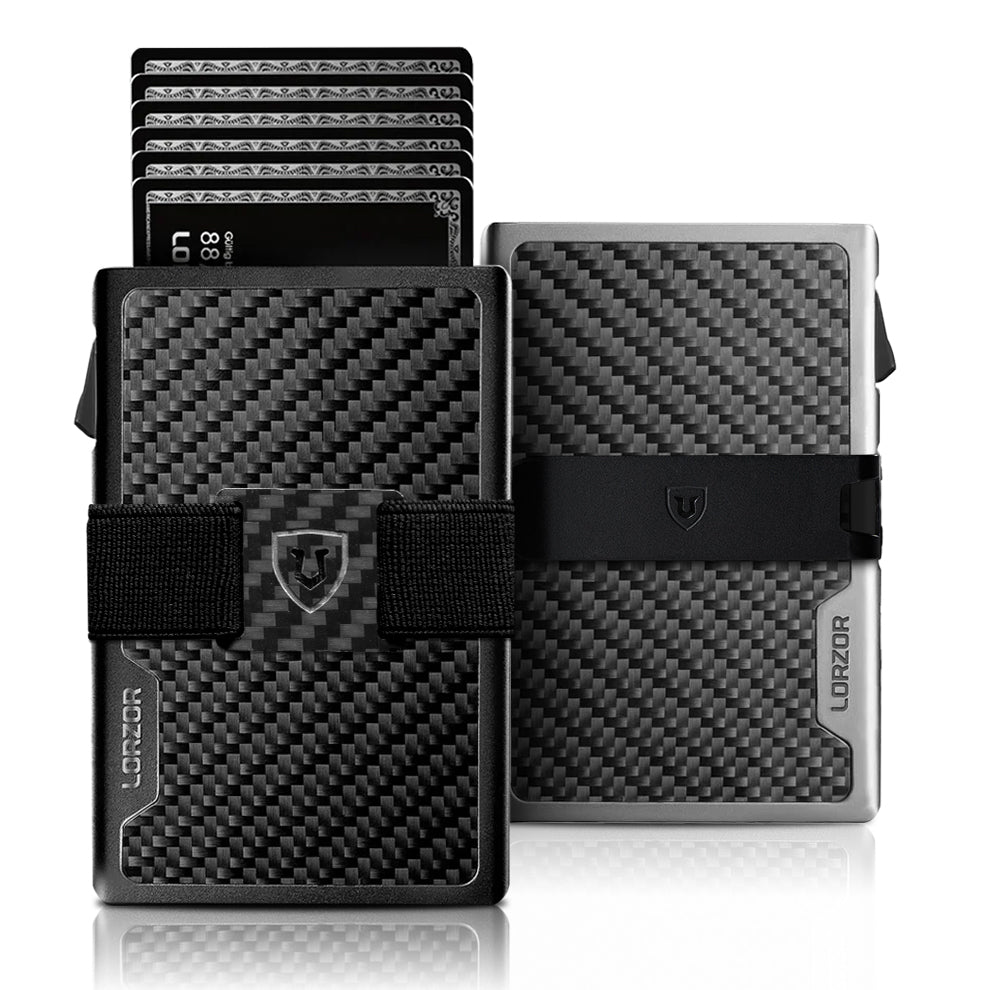
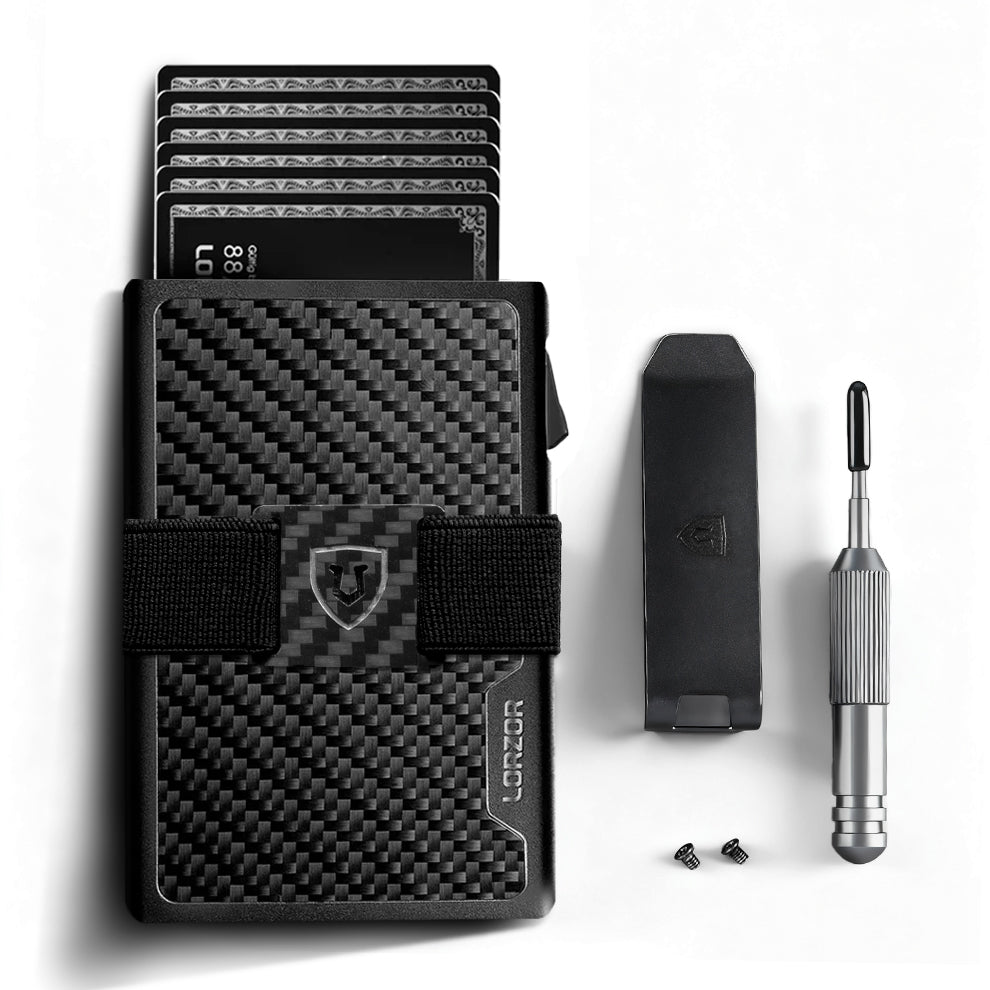
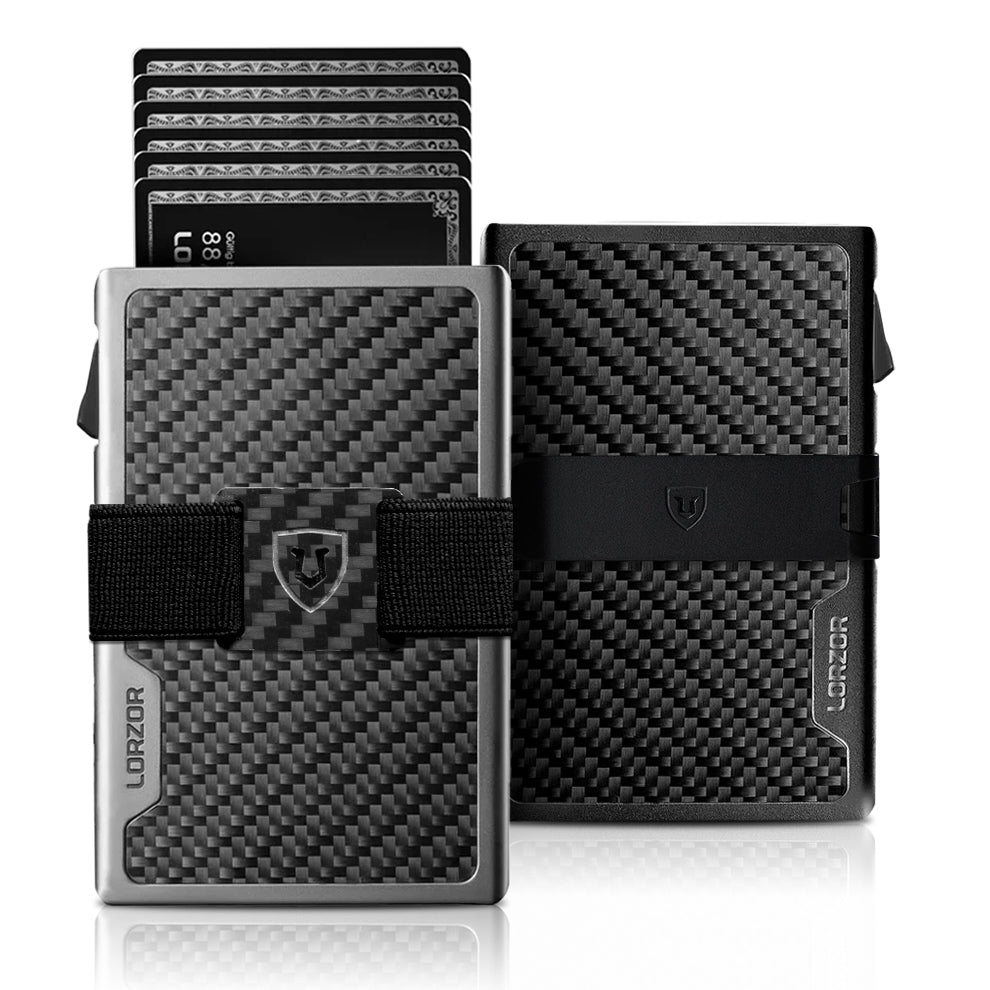
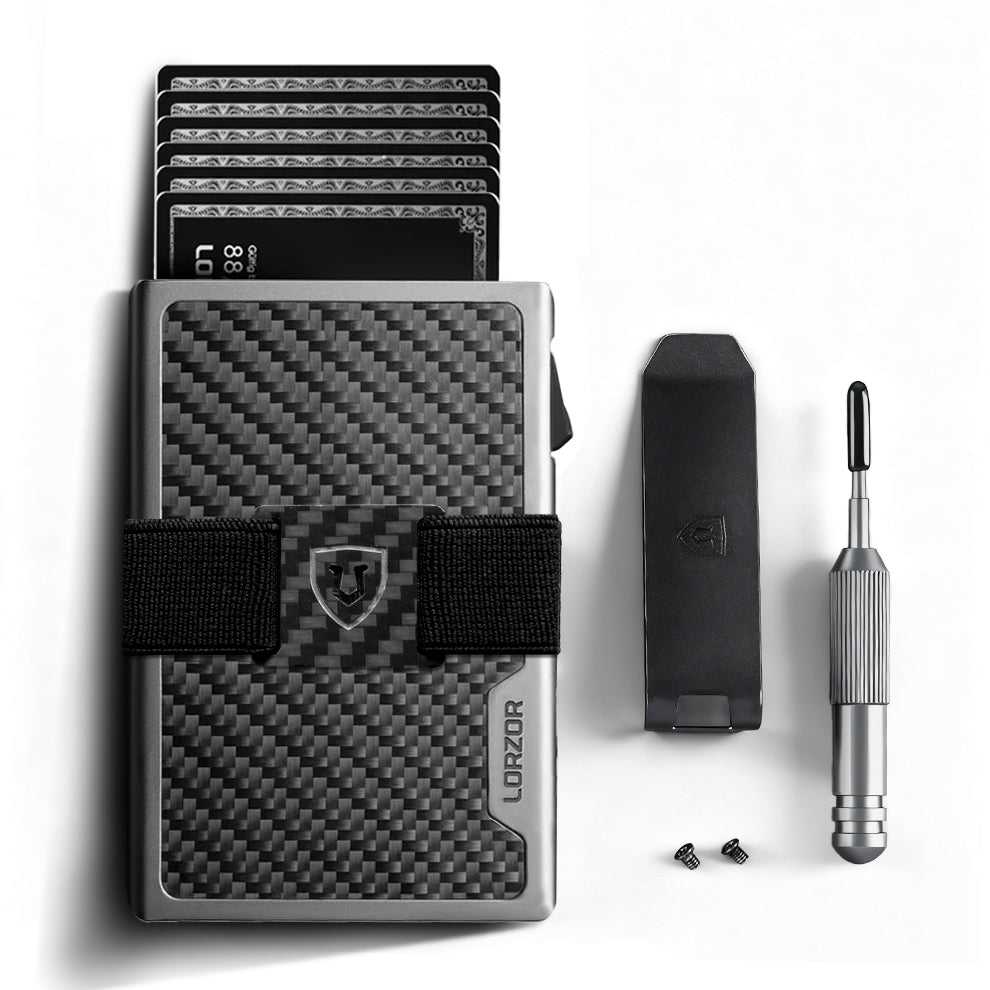
The 1979 uses an aluminum pop-up card chamber designed to hold 5-7 cards. With one motion, the card stack rises into a layered layout, so the most-used cards are easier to see and pull.
The mechanism is not there to perform. It is there to make the boring moments faster: paying, scanning, tapping, showing an ID, or grabbing the card you reach for every day.
There is also a bottom card access point, designed to help avoid the feeling of a card getting trapped inside the chamber. It is a small detail, but it speaks to the same idea: fast access only counts if the system stays easy to use.
The action should feel useful after the novelty is gone.
Capacity Only Matters After the Wallet Is Loaded
Many wallets look slim when they are empty. The real test starts after the cards go in. A good tactical wallet should carry enough for real life without pretending everyone only needs three cards.
The 1979 is built for that more honest version of everyday carry. Its pop-up chamber holds 5-7 cards, while the outer card slot adds space for another 3-5 cards. For daily use, the better balance is around 10 cards, depending on card thickness.
That number matters because it avoids two extremes.
A very small minimalist wallet can feel great until you need one more card. A traditional wallet can slowly turn into a pocket archive of old receipts, expired cards, and things you forgot were there.
The 1979 gives you room to carry what you actually use, then asks the rest to stay out.
That discipline is part of the name. 1979 is about making a personal object more capable without letting it become harder to live with.
Cash Still Needs a Place
Cash may not be the center of the wallet anymore, but it has not disappeared. You still may want folded bills for tipping, parking, small shops, travel, or the one place that somehow still does not make card payment easy.
The 1979 includes a money clip for folded bills, with a cutout structure designed to reduce weight while keeping the clip useful. It is not trying to bring back a full billfold. It is there for the practical amount of cash that still belongs in a modern wallet.
Cards have their place. Cash has its place. The wallet stays organized because each part handles one job instead of forcing everything into the same slot.
Right in Hand Comes Before Tactical
Pure metal wallets can be efficient. They can also feel hard, cold, and a little too technical for people who still want a wallet to feel like a personal object. That is where the 1979 takes a different route.
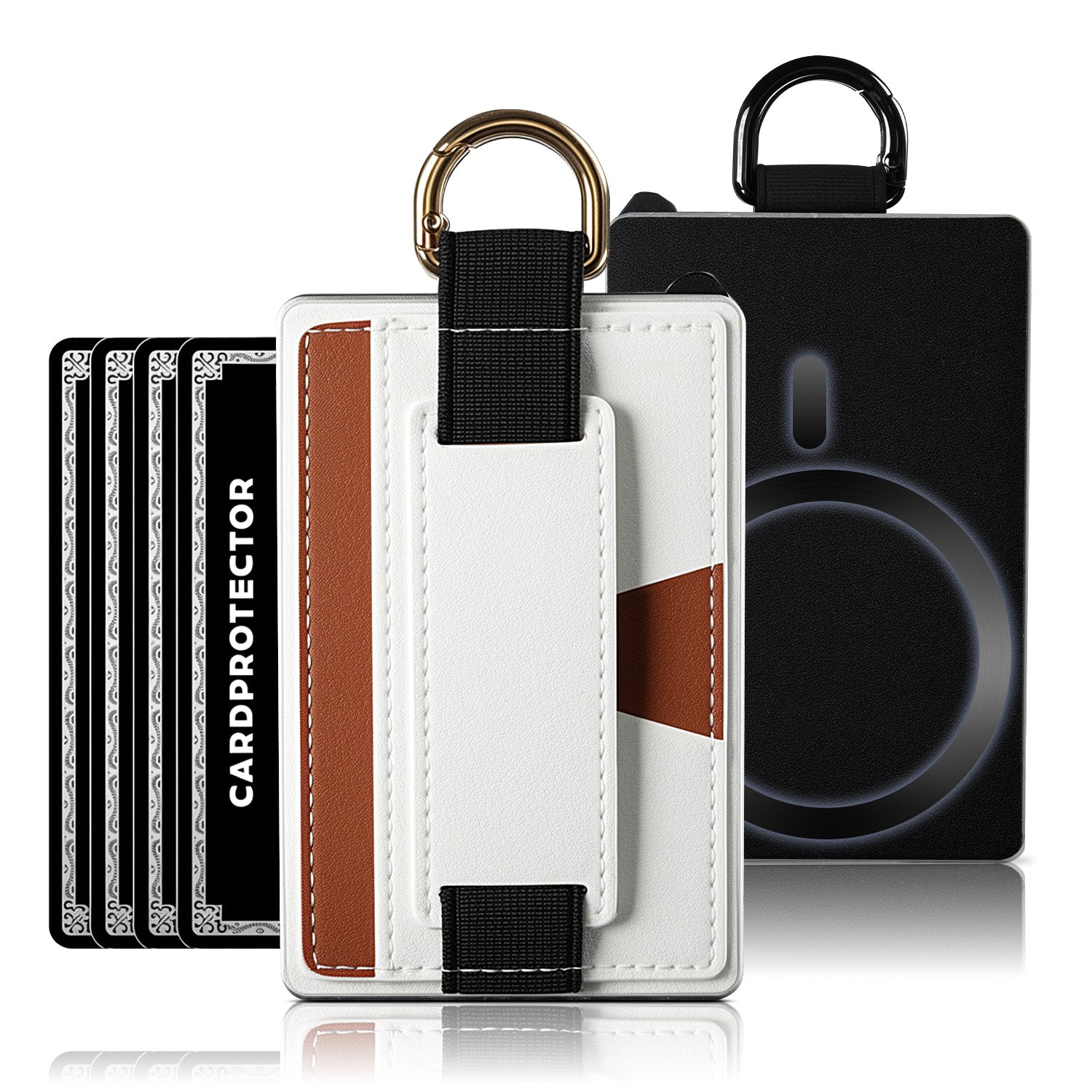
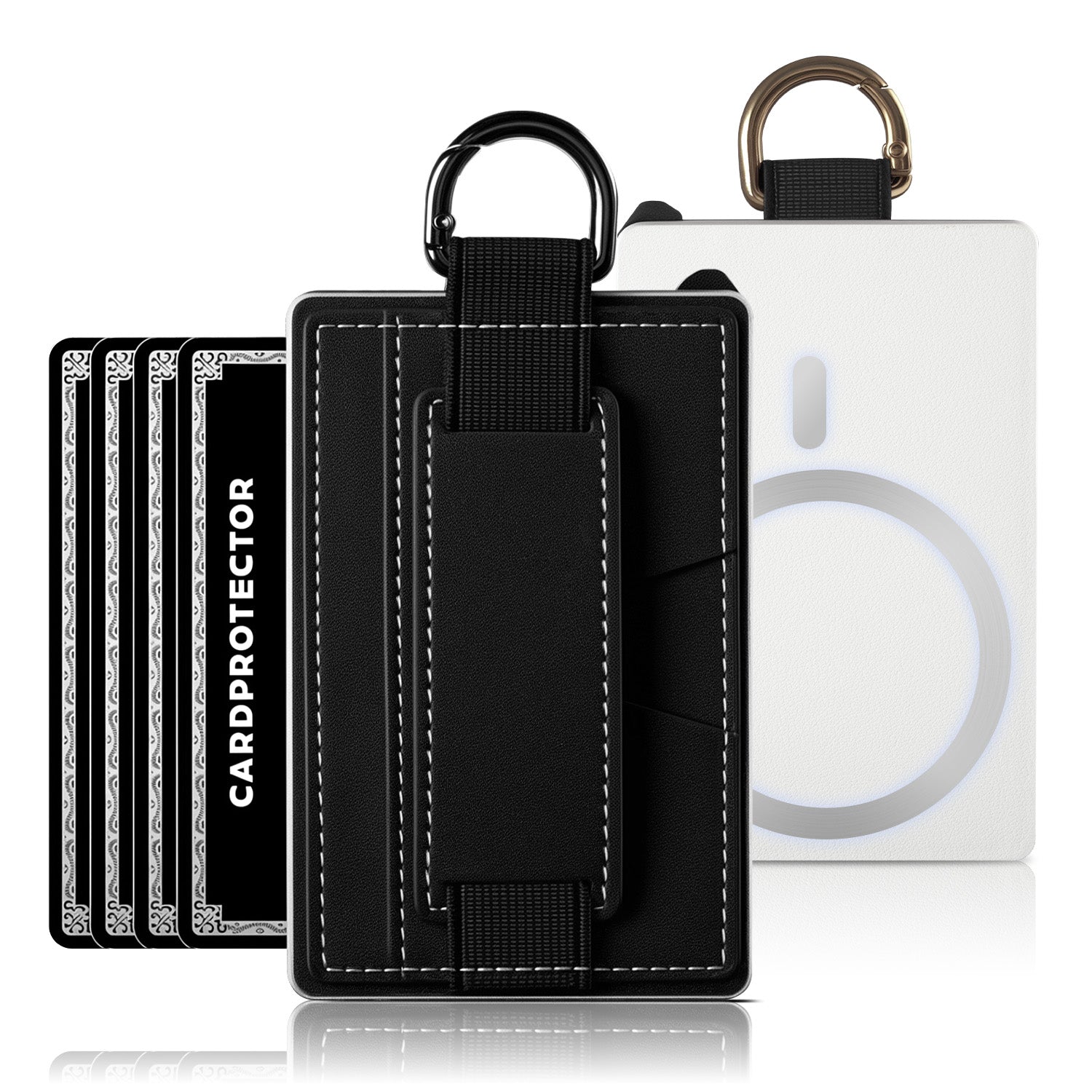
It combines a structured aluminum cardholder with full-grain leather, so the wallet keeps the controlled access of a modern metal wallet without losing the warmer hand-feel of leather. The leather surface changes the way the product lands in the hand. It adds grip, texture, and a more personal feel than bare metal alone.
A wallet is handled many times a day. You pick it up before leaving the house. You pull it out while sitting in a car. You place it on a table. You pass through work, travel, errands, dinner, and small daily payments with it nearby.
The 1979 is made for people who want the function of a modern wallet without giving up the feel of a real one.
RFID Protection Is Useful, But It Should Stay Quiet
RFID protection is one of those features that should work without becoming the whole personality of the wallet.

The 1979 uses RFID-blocking structure designed to help block 13.56 MHz RFID signals when compatible cards are placed in the protected card chamber. For most users, the value is simple: contactless cards have a more protected place to sit.
The better point is practical security. Your cards should be organized, easy to access, and better protected in the place they are meant to be carried. RFID protection is part of that system, not a reason to make the wallet feel like a gadget.
Attachment Holes Should Add Options, Not Clutter
In the last few years, more people have started wanting small attachment options on wallets. A keychain. A strap. A holder. A setup that fits a commute, travel day, bag, or personal routine.
The 1979 includes holes on both top sides for optional attachment paths such as a keychain, strap, or AirTag holder setup.
Attachment points should not force everyone into the same carry style. Some users want the cleanest possible front-pocket wallet. Others want a little more connection to keys, bags, or a tracking accessory. A good tactical wallet leaves room for both.
This is controlled flexibility. The feature is there when it helps. The rest of the time, it stays out of the way.
That fits the 1979 philosophy: the object should move with you without forcing every user into the same setup.
Slim Is Not the Same as Empty
The 1979 measures about 2.87 x 3.89 x 0.6 inches and weighs about 80g.

Those numbers matter because a wallet should be judged after it is built for real use, not photographed empty. The 1979 is not trying to be the smallest pure metal minimalist wallet.
Its real value is balance.
Pop-up card access, extra card capacity, folded cash storage, RFID protection, optional attachment paths, aluminum structure, and leather feel all have to live inside the same compact object.
For someone who carries only two cards and no cash, a thinner cardholder may be enough. For someone who wants fast card access, a usable money clip, extra card space, and a leather-led feel, the 1979 makes more sense.
It does not chase the smallest possible outline. It chases a more useful front-pocket balance.
Who the 1979 Is For
The 1979 is a strong fit if you want a front-pocket wallet with more function than a basic card sleeve.
It is for people who like pop-up card access but do not want to give up leather. It is for people who still carry some cash. It is for people who want RFID protection without turning the wallet into a tech object. It is for people who need more than a few cards, but do not want a traditional wallet swelling in their pocket.
It is probably not for the strictest minimalist. If your goal is the absolute smallest wallet possible, a pure metal cardholder or thin sleeve may fit better. The 1979 is built for a different buyer: someone who wants a compact system, not just a smaller object.
That is what makes it tactical in the useful sense: not louder, not heavier, just more organized.

The Better Question
The better question is not whether a wallet looks tactical. The better question is whether it helps you carry with more control, while still feeling right in hand.
The LORZOR 1979 Tactical Wallet answers that with a simple idea: every part should earn its place. The aluminum chamber controls the card stack. The pop-up action speeds up access. The outer slot adds backup capacity. The money clip manages cash. RFID protection adds practical security. Attachment holes leave room for optional carry setups. Full-grain leather brings the object back to the hand.
That is what a tactical wallet should do.
It should help you carry more of what matters, without letting the wallet take over your pocket.
That is the LORZOR 1979 idea in one line: more capable, still personal, right in hand.
FAQ
What is a tactical wallet?
A tactical wallet is a compact wallet designed around practical function, structure, and everyday control. For LORZOR, tactical does not mean military styling. It means every part has a job, and the wallet works as a coordinated carry system.
Is the LORZOR 1979 a minimalist wallet?
It is minimalist in profile, but not minimal in function. The 1979 is designed for people who want slim front-pocket carry, pop-up card access, cash storage, RFID protection, and extra card capacity in one controlled form.
Why is it called 1979?
For LORZOR, 1979 refers to a turning point in personal carry, when everyday objects started becoming more portable, personal, and closely tied to movement. The name helps explain the wallet's design idea: more capability, kept controlled enough to stay close to the body.
What does Right in Hand mean for the 1979?
Right in Hand means the wallet should feel natural before it feels tactical. The 1979 uses leather, controlled thickness, pop-up access, and separated storage roles so the added function still feels comfortable in daily carry.
How many cards does the LORZOR 1979 hold?
The aluminum pop-up chamber holds 5-7 cards, and the outer card slot can add space for 3-5 more cards. For daily use, around 10 cards is the better balance, depending on card thickness.
Does the LORZOR 1979 hold cash?
Yes. The 1979 includes a money clip for folded bills. It is designed for practical cash carry, not for replacing a large traditional billfold.
Is the LORZOR 1979 RFID-blocking?
Yes. The 1979 includes RFID-blocking structure designed to help block 13.56 MHz RFID signals when compatible cards are placed in the protected card chamber.
Is an AirTag included with the LORZOR 1979?
No. The 1979 has attachment holes that can support optional setups such as a keychain, strap, or AirTag holder, but AirTag is not included unless a specific bundle clearly says otherwise.
Who should choose the LORZOR 1979?
Choose the 1979 if you want fast card access, leather feel, folded cash storage, RFID protection, and more organization than a basic cardholder. If you only carry two or three cards and want the smallest wallet possible, a simpler sleeve may be a better fit.
Explore Modern Carry
Discover leather-led carry goods built for work, travel, and everyday movement.