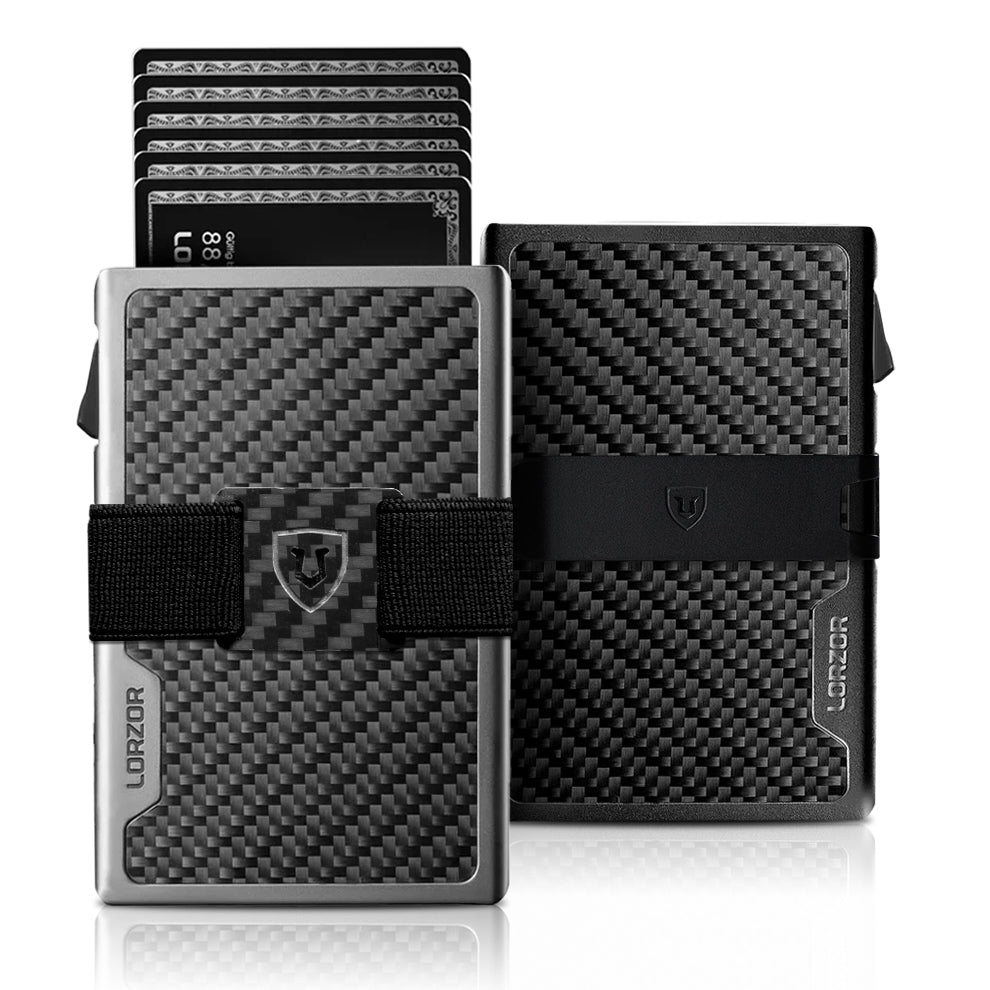
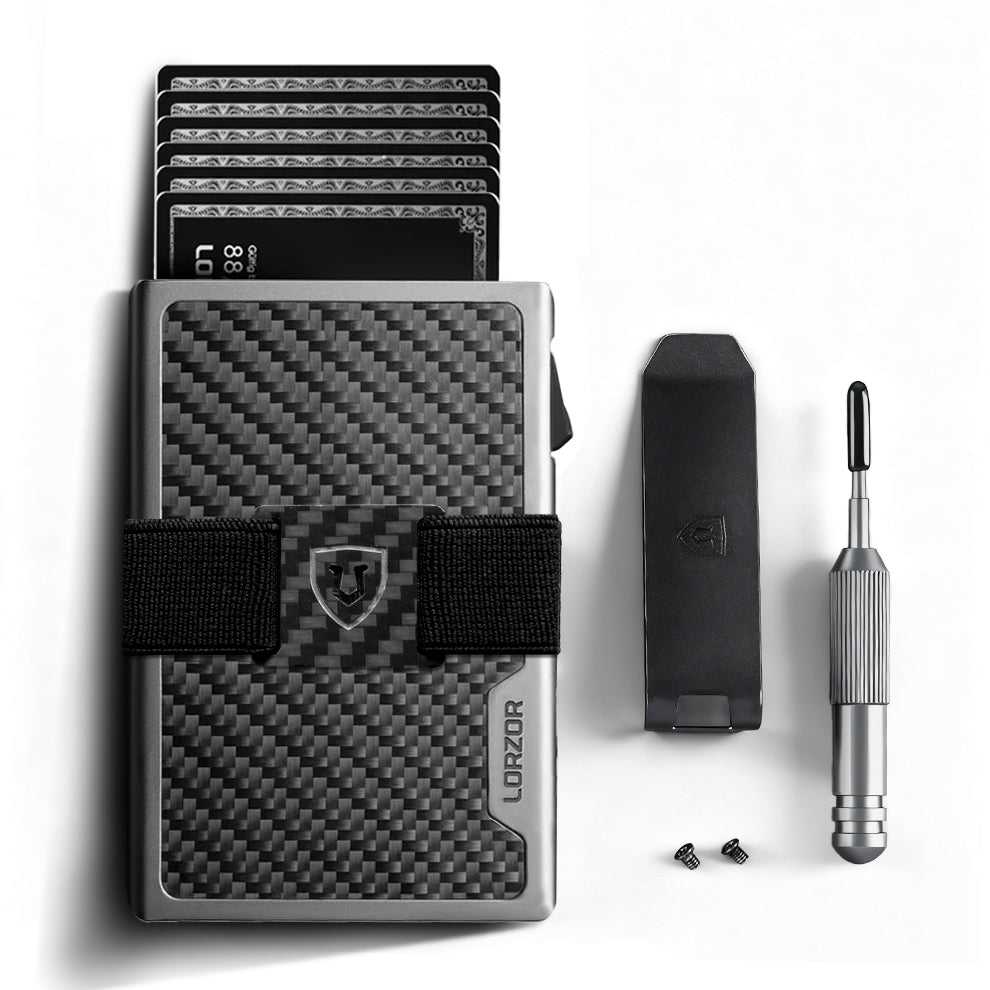
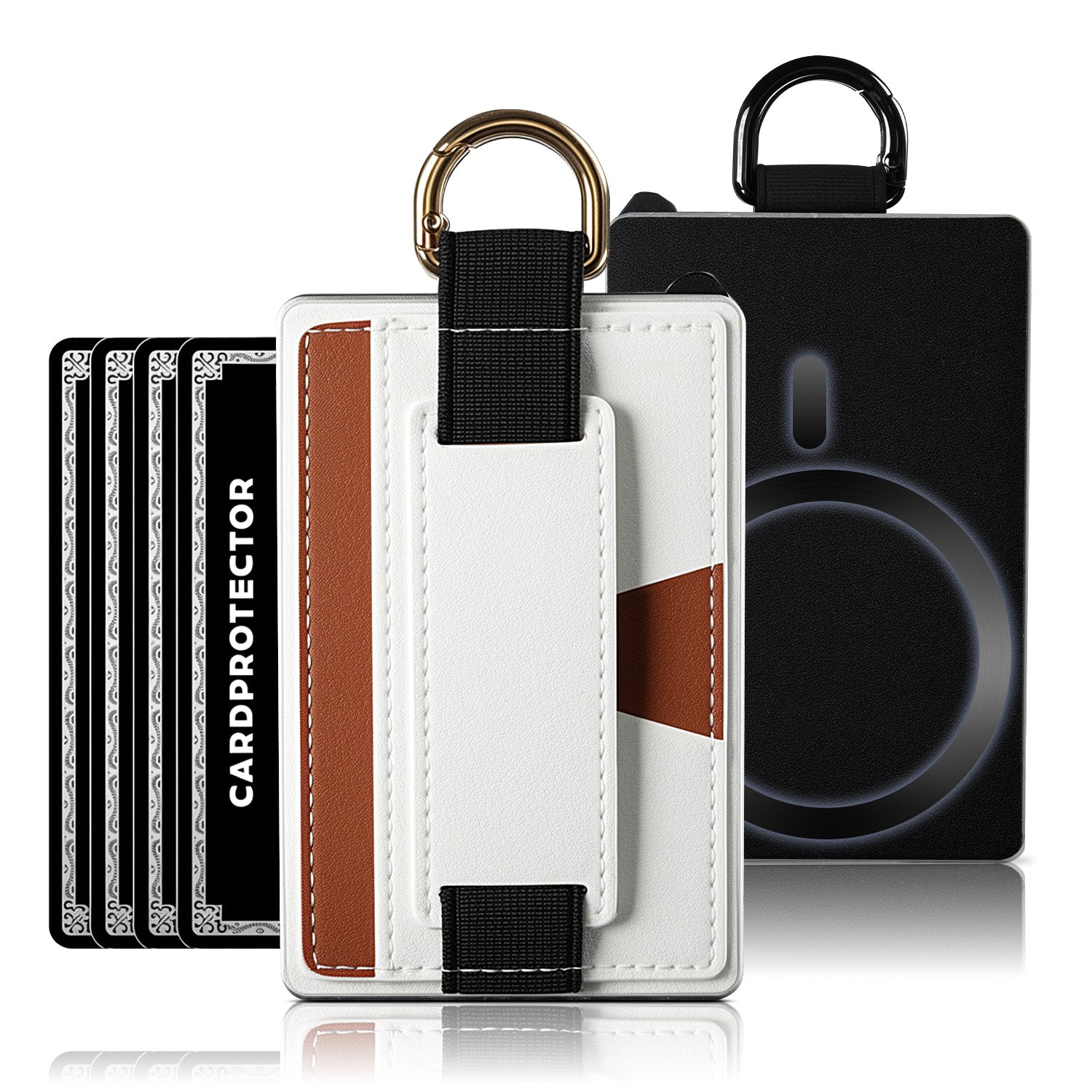
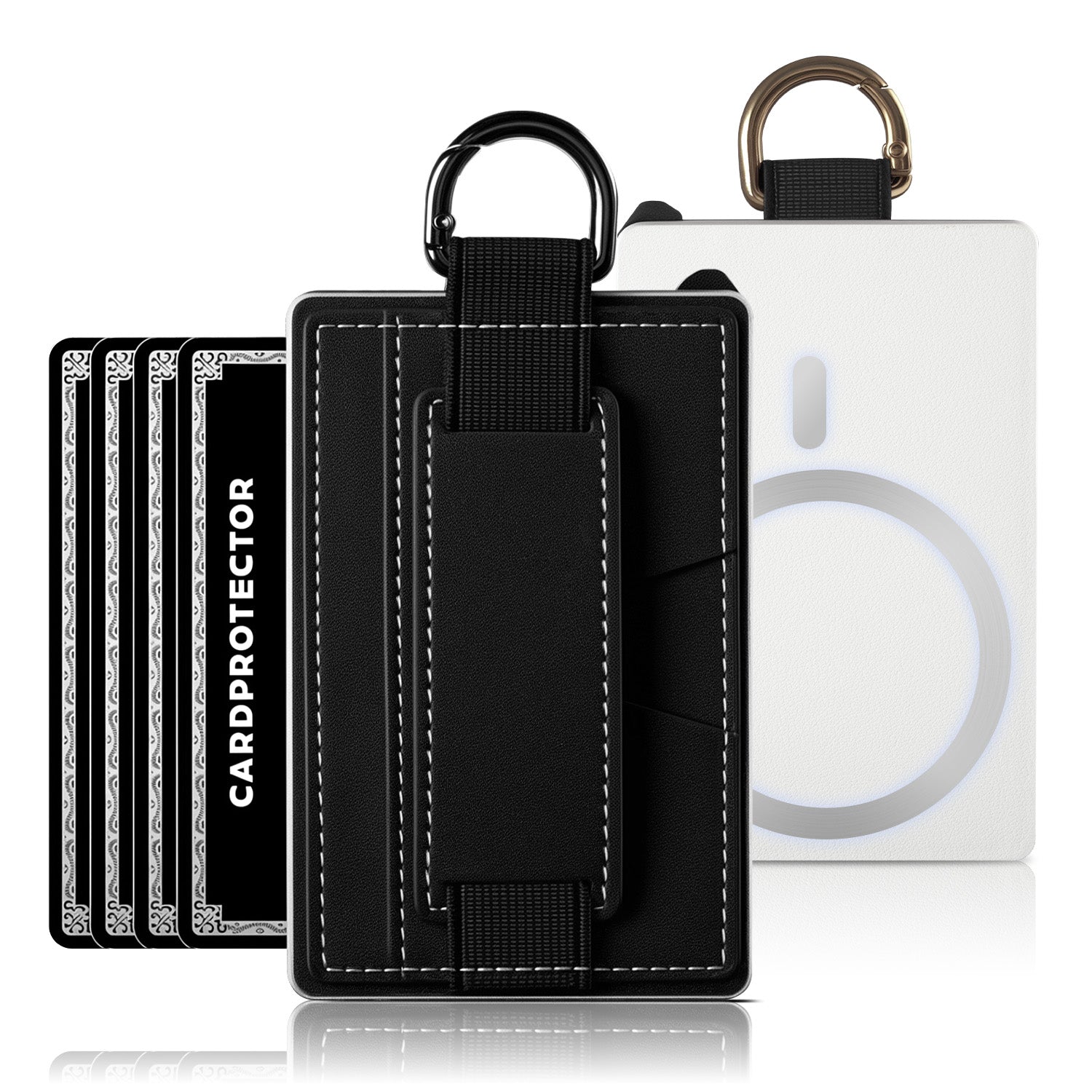
Why Leather and Aluminum Need More Than Glue ?

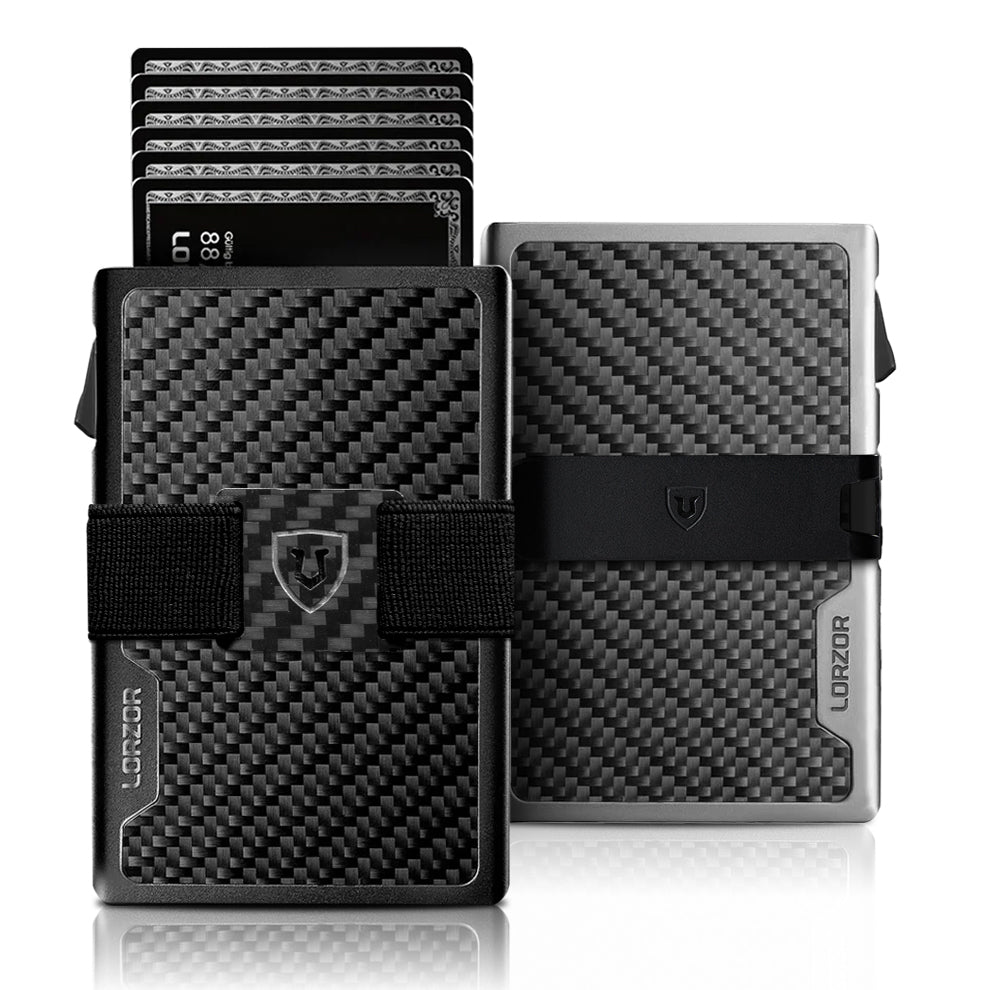
A leather-wrapped aluminum wallet looks simple from the outside. The real test is whether the leather body and metal cardholder core stay connected after months of pocket pressure, card access, and daily movement.
A leather-wrapped aluminum wallet has a problem most people will never think about until it fails.
It can look clean in a product photo. It can feel solid on the first day. The cardholder can slide smoothly, the leather can feel rich, and the edge can look tight.
Then real life starts.
The wallet goes into a front pocket. It gets pulled out by one corner at a checkout counter. It sits in a car, presses against denim, warms in a hand, cools on a desk, and takes the same small stresses over and over again. A card is pushed up. Cash is clipped in. The wallet is squeezed into a bag beside keys, receipts, and a phone charger that should have been put somewhere else.
That is where the hidden construction begins to matter.

The Difficult Part Is Not the Leather or the Aluminum
Leather and aluminum are both strong materials, but they do not behave the same way.
Leather bends. It softens with use. It responds to heat, pressure, moisture, and the shape of the hand. Full-grain leather can develop character over time, which is part of why people still choose a leather wallet instead of a purely technical card case.
Aluminum does something different. It holds shape. It protects the card stack. It gives a pop-up cardholder its clean structure and precise movement.
The challenge begins where those two materials meet.
In a leather-and-aluminum wallet, the connection between the leather body and the metal cardholder core is one of the hardest details to get right. If that connection is weak, the first signs often appear around the edge: a lifted corner, a loose side, or a small gap between the leather and the metal. Once the edge starts to open, daily movement can make the problem grow.
This is why glue alone is not enough of a design answer.

Glue Helps. Structure Does the Real Work.
Adhesive matters. A wallet like this still needs a strong bonding layer. But the bond should not depend on adhesive alone, especially when one material is flexible and the other is rigid.
The better question is: how does the whole structure share stress?
That question led to the LORZOR LockBond™ Structure.
LockBond™ is LORZOR's leather-to-aluminum bonding structure for wallets that combine a full-grain leather body with an aluminum cardholder core. It is designed to strengthen the hidden connection between the leather exterior and the metal core, helping the wallet resist edge lifting, adhesive separation, and structural loosening during everyday carry.
Instead of treating the leather and aluminum as two flat surfaces that simply need to be pasted together, LockBond™ is built around a more controlled bonding area. The leather layer, adhesive system, reinforcing material, stitch placement, and prepared metal surface all work together.
You do not see most of that when you hold the wallet.
You notice the result when the edge still feels tight.
Why the Edge Matters So Much
The edge of a wallet lives a harder life than the center.
That is where fingers pull. That is where the wallet rubs against a pocket. That is where pressure starts when the wallet is bent slightly during a commute, a drive, or a long travel day.
On a leather-wrapped metal wallet, a weak edge can turn into the first visible failure point. A small lift may not look dramatic at first, but it changes how the wallet feels. The product stops feeling like one object and starts feeling like a leather cover sitting on top of a metal part.
LockBond™ focuses on that hidden connection because LORZOR wants the leather and aluminum to behave like one designed object. The aluminum should give structure. The leather should give warmth and grip. Neither material should feel like an afterthought attached to the other.
That is the difference a customer feels after weeks and months, not only in the first unboxing.
What the Pull-Strength Test Showed

LORZOR tested leather-to-aluminum bonding with a pull-strength setup designed to stress the connection between the leather body and the metal cardholder core.
In the same pull-strength test setup, the basic control sample separated at approximately 60 N, or about 13.5 pounds of force. Tested LORZOR leather-and-aluminum wallet samples reached approximately 143-240 N before separation, or about 32-54 pounds of force.
| Test sample | Result in the same pull-strength setup |
|---|---|
| Basic control sample | Separated at approx. 60 N, about 13.5 lbf |
| Tested LORZOR leather-and-aluminum wallet samples | Reached approx. 143-240 N before separation, about 32-54 lbf |
The point is not to turn a wallet into laboratory equipment. The point is simpler: when the connection is engineered as a structure, it can handle more pull force before separating.
That matters in ordinary use. It matters when the wallet is pulled from a tight front pocket. It matters when a trifold wallet is opened repeatedly. It matters when a pop-up cardholder is used every day instead of only tested once on a clean table.
Where LockBond™ Fits in LORZOR Wallets
LockBond™ is especially important in LORZOR designs that combine leather with an aluminum pop-up cardholder core, including TriPop-style wallets and 1979-related leather-and-aluminum structures.
Take the LORZOR TriPop Wallet as an example. The product has to do several things at once. It needs a full-grain leather surface that feels refined in hand. It needs a structured aluminum cardholder for pop-up card access. It needs the organization of a trifold layout without feeling loose or unfinished. And it has to survive the repetitive handling that comes with real daily carry.

That is a lot to ask from one small object.
The LORZOR 1979 family has a different personality, but it faces a similar construction demand. It brings leather, aluminum, card access, cash carry, RFID protection, and EDC-friendly attachment points into a compact wallet. When a product carries that much function, the hidden joining points cannot be treated casually.
Every added part has to earn its place.
Leather Still Has to Feel Like Leather
There is another reason this construction matters: LORZOR does not want leather to become a thin costume over a metal tool.
The leather is the part the hand meets first. It gives the wallet warmth, grip, and a surface that can age with the person carrying it. In a good leather-and-aluminum wallet, the metal should not erase that feeling. It should support it.
That is why the bond matters beyond durability. If the leather starts to lift, the wallet loses more than strength. It loses the hand-feel that made leather worth choosing.
Right in Hand is not only about softness. It is about trust. When you pick up the wallet, the structure should feel settled. The edge should feel controlled. The card access should feel clean. Nothing should make you wonder whether the leather and metal are still working together.

A Better Wallet Is Tested in Boring Moments
Durability is easy to talk about in big words. The better test is boring.
Does the wallet still feel tight after being carried in jeans?
Does the edge stay flat after repeated opening and closing?
Does the leather body keep its place around the aluminum cardholder after the pop-up mechanism becomes part of your daily rhythm?
These are not dramatic moments. They are the moments that decide whether a wallet becomes trusted or annoying.
LORZOR LockBond™ Structure was developed for that kind of use. It is not there to make the wallet louder. It is there so the wallet can stay quiet, solid, and dependable while the rest of the design does its job.
Cards should come out cleanly.
Leather should feel good in the hand.
The wallet should stay together.
That is the whole point.
More Than Glue
Leather and aluminum can make a modern wallet feel right: warm where the hand touches it, structured where the cards need control, and slim enough for real everyday carry.
But they need more than glue.
They need a structure that understands both materials, the stress at the edge, and the way people actually use a wallet after the first day.
That is what LORZOR LockBond™ Structure is built to do: help full-grain leather and the aluminum cardholder core stay firmly connected through everyday carry.
The best construction detail is often the one you never have to think about.
FAQ
What is LORZOR LockBond™ Structure?
LORZOR LockBond™ Structure is a leather-to-aluminum bonding structure developed for wallets that combine a full-grain leather body with an aluminum cardholder core. It helps strengthen the hidden connection between the leather exterior and the metal core, especially around the edges where daily stress often begins.
Why do leather-and-aluminum wallets need more than glue?
Leather bends and softens with use, while aluminum stays rigid. If the two materials rely only on a simple adhesive layer, repeated pulling, pocket pressure, and card access can stress the bond over time. A stronger structure helps the materials stay connected more reliably.
What did LORZOR's pull-strength testing show?
In the same pull-strength test setup, a basic control sample separated at approximately 60 N, or about 13.5 pounds of force. Tested LORZOR leather-and-aluminum wallet samples reached approximately 143-240 N before separation, or about 32-54 pounds of force.
Does LockBond™ make the wallet thicker?
The purpose of LockBond™ is to improve the leather-to-aluminum connection without changing what customers expect from a modern wallet: a clean shape, controlled edge feel, and practical everyday carry.
Which LORZOR products use this kind of construction?
This article explains LORZOR's construction thinking for leather-and-aluminum wallet designs, especially products that pair a leather wallet body with an aluminum pop-up cardholder core, such as TriPop-style wallets and 1979-family structures built around leather and aluminum.
Why does this matter to customers?
Most customers do not buy a wallet because of a bonding layer. They care that the edge stays tight, the leather feels right in hand, and the wallet remains solid through daily use. LockBond™ is built around that result.