How LORZOR RFID Protection Works ?
RFID protection is most useful when customers know what was tested, where the shielding is located, and how a card should be carried. Here is how LORZOR approaches all three.
A contactless card is designed to be read with a tap. That convenience is useful at a checkout, subway gate, hotel, or office door. It also raises a fair question: what stands between the card and a reader when the card is sitting in a wallet?
For LORZOR, an answer such as “RFID blocking” is not specific enough. A useful answer should tell you what frequency was tested, how the shielding works, where the protected area is located, and how the card needs to be carried.
That is what this page is here to explain.
What RFID Protection Is Designed to Interrupt
RFID is a broad family of radio-frequency identification technologies. The part most relevant to contactless payment cards and many tap-based interactions is the 13.56 MHz range. The NFC Forum identifies 13.56 MHz as the base frequency used by Near Field Communication, the short-range technology behind many contactless exchanges.
During a normal tap, a reader creates a radio-frequency field. A compatible card placed close enough to that reader can use the field to establish communication. RFID-blocking material is intended to interrupt that connection while the card is stored inside a protected compartment.

It is not a software setting, and it does not switch the card off. The protection comes from the physical construction around the card.
How LORZOR Builds the Shielding Into a Wallet
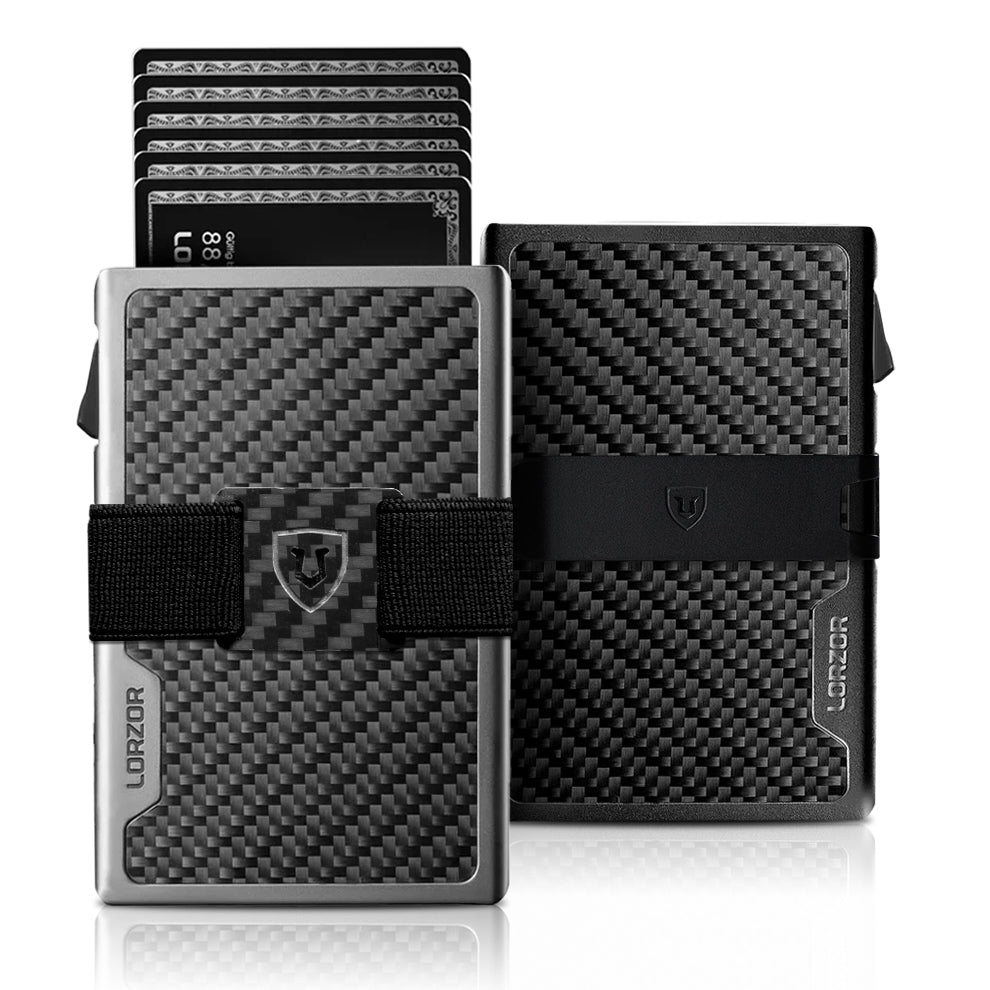
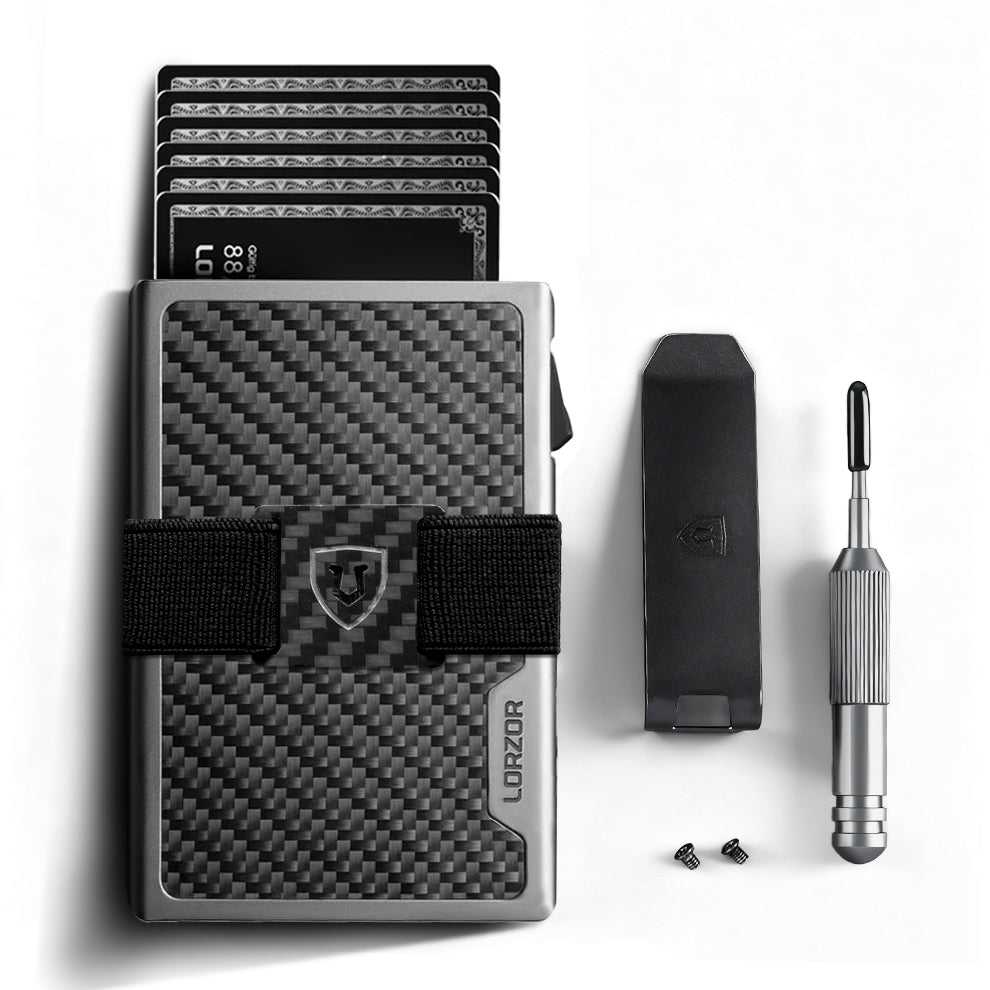
LORZOR uses two main forms of shielding across its wallet and passport-holder designs: aluminum card chambers and RFID-shielding fabric.
An aluminum chamber can do more than hold a card stack. Its conductive structure also forms a barrier between the cards inside and a nearby 13.56 MHz reader. In leather wallets and passport holders without the same aluminum layout, shielding fabric can be placed inside selected panels or compartments to create a protected storage area without turning the entire product into a metal case.
The exact construction depends on the product. A pop-up wallet, a bifold, a trifold, and a passport holder do not organize cards in the same way, so their protected zones are not always located in the same place.
This distinction matters. RFID protection belongs to a compartment, not simply to a product name.

How LORZOR Tests RFID Protection
LORZOR has tested its RFID-blocking constructions in professional laboratory conditions at 13.56 MHz. The test program included contactless credit cards as well as professional signal test cards designed to verify whether a reader could establish communication.
In the tested configurations, the cards were completely inserted into the intended protected areas. The reader was unable to read them.
The laboratory work is supported by TÜV and AGC testing documentation. LORZOR has also purchased dedicated reading equipment for internal checks and has recorded the process through photographs and video. These materials allow the shielding result to be shown rather than reduced to an icon on a product page.
The wording “tested at 13.56 MHz” is intentional. RFID technologies also exist at other frequencies and for other purposes. The result described here applies to the 13.56 MHz test conditions used for LORZOR contactless-card protection.
The Protected Area Depends on the Product
All current LORZOR wallet and passport-holder families include RFID protection, but that does not mean every pocket on every design is shielded.
On one product, the aluminum card chamber may be the protected area. On another, shielding fabric may sit behind the main card section or passport compartment. An exterior quick-access slot may be intentionally left outside that shield so a frequently used card can be removed easily.
The practical rule is straightforward: place a card that needs RFID protection fully inside the protected compartment identified for that product.
A card held halfway outside the compartment is no longer surrounded by the intended shielding. The same applies to a card carried in an exterior slot that is not marked as protected.
Product diagrams should therefore do more than display capacity. They should identify the protected zone clearly, so customers can decide where to place a contactless payment card, access card, or other compatible item.
A Specific Example: LORZOR 1979 Tactical Wallet
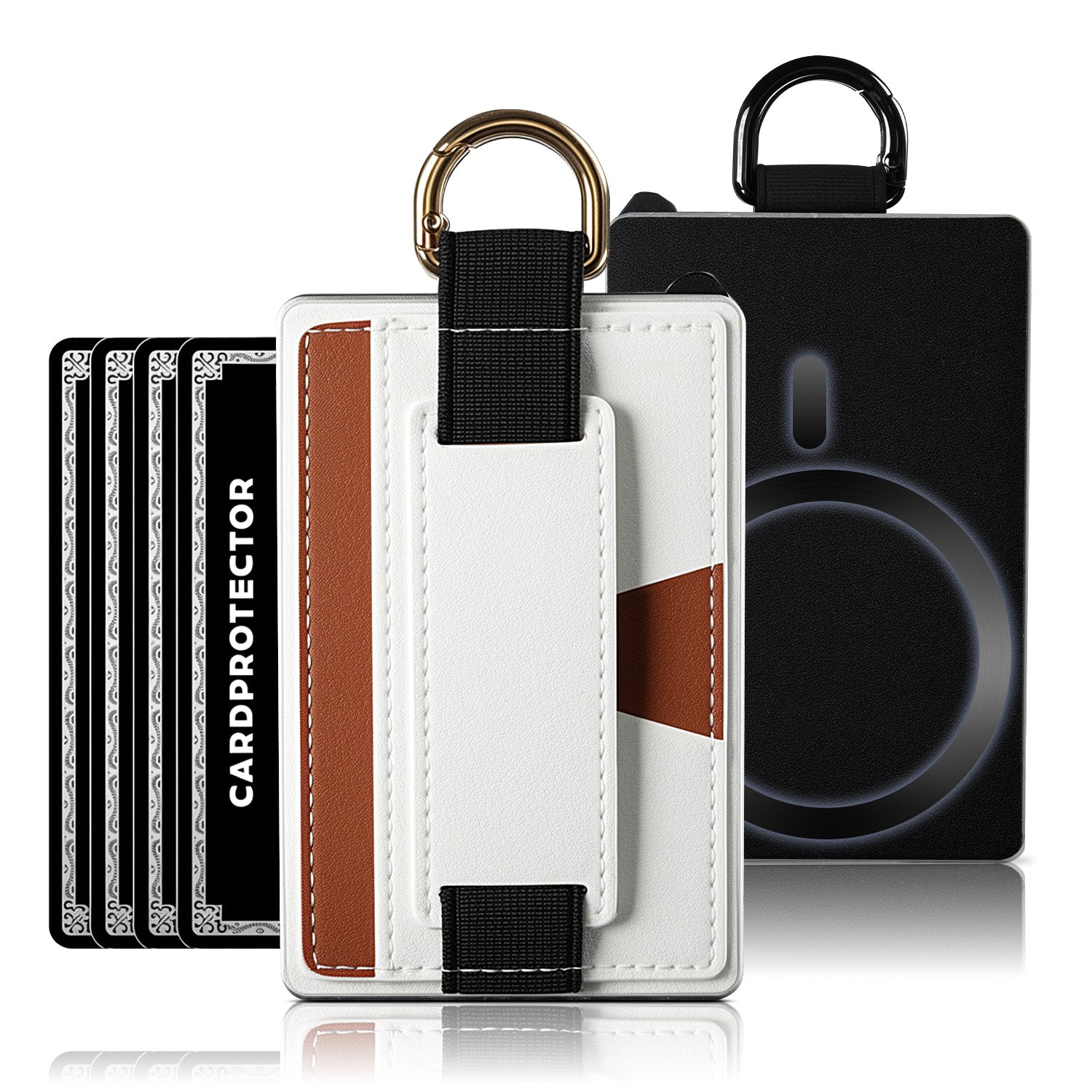
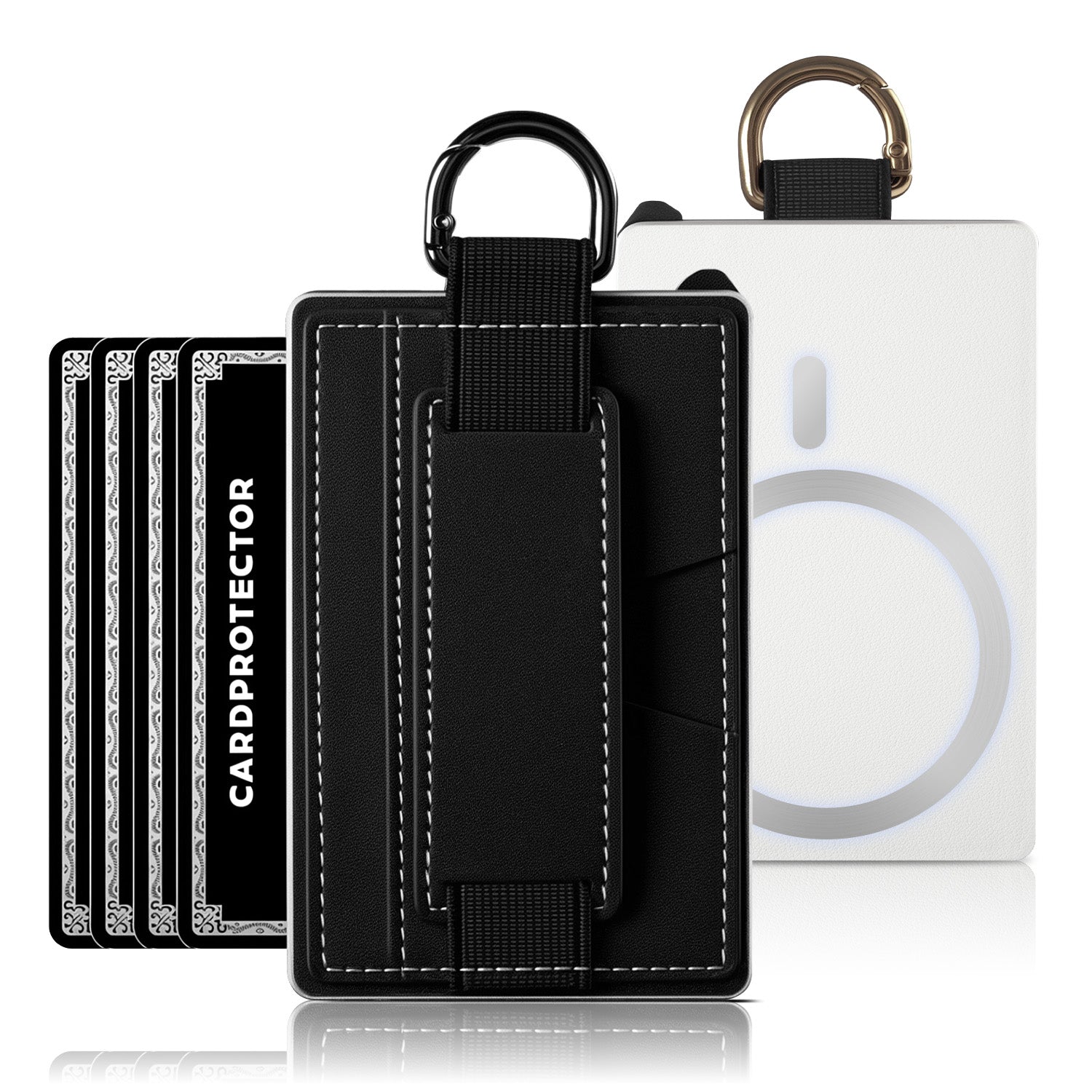
The LORZOR 1979 Tactical Wallet makes the difference between storage and protected storage especially easy to see.
Its aluminum pop-up chamber is the RFID-protected card area. Cards placed fully inside that chamber are surrounded by the structure tested for 13.56 MHz blocking.
The exposed front leather slot serves a different purpose. It provides separate, quick-access storage, but it does not provide RFID shielding. A card placed there should be treated as readily accessible rather than protected from contactless reading.
That is not a hidden exception. It is part of using the layout correctly: protected cards go in the aluminum chamber; a card placed in the front leather slot is outside the shield.

What RFID Protection Does Not Replace
RFID protection addresses one specific situation: contactless communication with a compatible card while that card is fully stored in a tested, shielded area.
It does not prevent someone from physically taking a wallet. It does not stop online payment fraud, phishing, account compromise, or misuse of card information obtained elsewhere. It also cannot protect a card while the card is in your hand, partially exposed, or stored in an unshielded pocket.
Those limits do not make RFID protection unimportant. They make its purpose clearer. It is one physical layer of everyday card security, designed to stay in the background until the card is deliberately removed for use.
How to Use a LORZOR RFID-Protected Compartment
You do not need a special routine. Four habits are enough:
- Check the product diagram to identify the protected compartment.
- Insert the card completely into that compartment.
- Treat exterior or quick-access slots as unprotected unless the product page identifies them otherwise.
- Keep the card inside the protected area until you are ready to use it.
For a wallet with several storage areas, decide which cards need shielding and which card, if any, you prefer to keep immediately accessible. The layout can then work with the way you move through the day instead of forcing every card into the same role.
Trust Should Be Visible
RFID protection is difficult to judge from a product photograph alone. A lining can be hidden. An aluminum chamber can look like ordinary structure. A small RFID icon cannot show where the protection begins or ends.
That is why LORZOR is building this information around visible evidence: laboratory documentation, 13.56 MHz test results, photographs, video, material diagrams, and product-specific protected-zone guidance.
The most useful claim is not simply that a wallet blocks RFID. It is that a customer can see what was tested, understand where the shield is located, and know how to carry the card correctly.
That is how RFID protection becomes part of a trustworthy product rather than another unexplained feature on a list.
FAQ
Do all LORZOR wallets and passport holders include RFID protection?
Yes. Current LORZOR wallet and passport-holder families include an RFID-protected area. The location and construction of that area vary by product, so customers should check the product-specific diagram.
Does every card slot provide RFID protection?
No. Some exterior or quick-access slots are outside the shield. RFID protection applies only to the compartment identified as protected for that product.
What frequency has LORZOR tested?
LORZOR has tested its RFID-blocking constructions at 13.56 MHz using contactless credit cards and professional signal test cards.
What happened during the test?
When the cards were fully inserted into the intended protected compartments, the reader could not establish a read under the tested conditions.
Is the front leather slot on the LORZOR 1979 RFID protected?
No. The aluminum pop-up chamber is the protected card area. The exposed front leather slot is intended for separate quick access and does not provide RFID shielding.
Does the card need to be completely inside the protected compartment?
Yes. A card should be fully inserted into the designated protected area. A partially exposed card may not receive the intended shielding.
Does an RFID-blocking wallet prevent every kind of card fraud?
No. RFID shielding addresses contactless reading while a compatible card is stored in the protected area. It does not prevent physical theft, phishing, online fraud, account compromise, or misuse of information obtained elsewhere.
Using RFID Protection Correctly
Check the protected-compartment diagram on each product page before deciding where to carry a contactless card.